
Before you enter
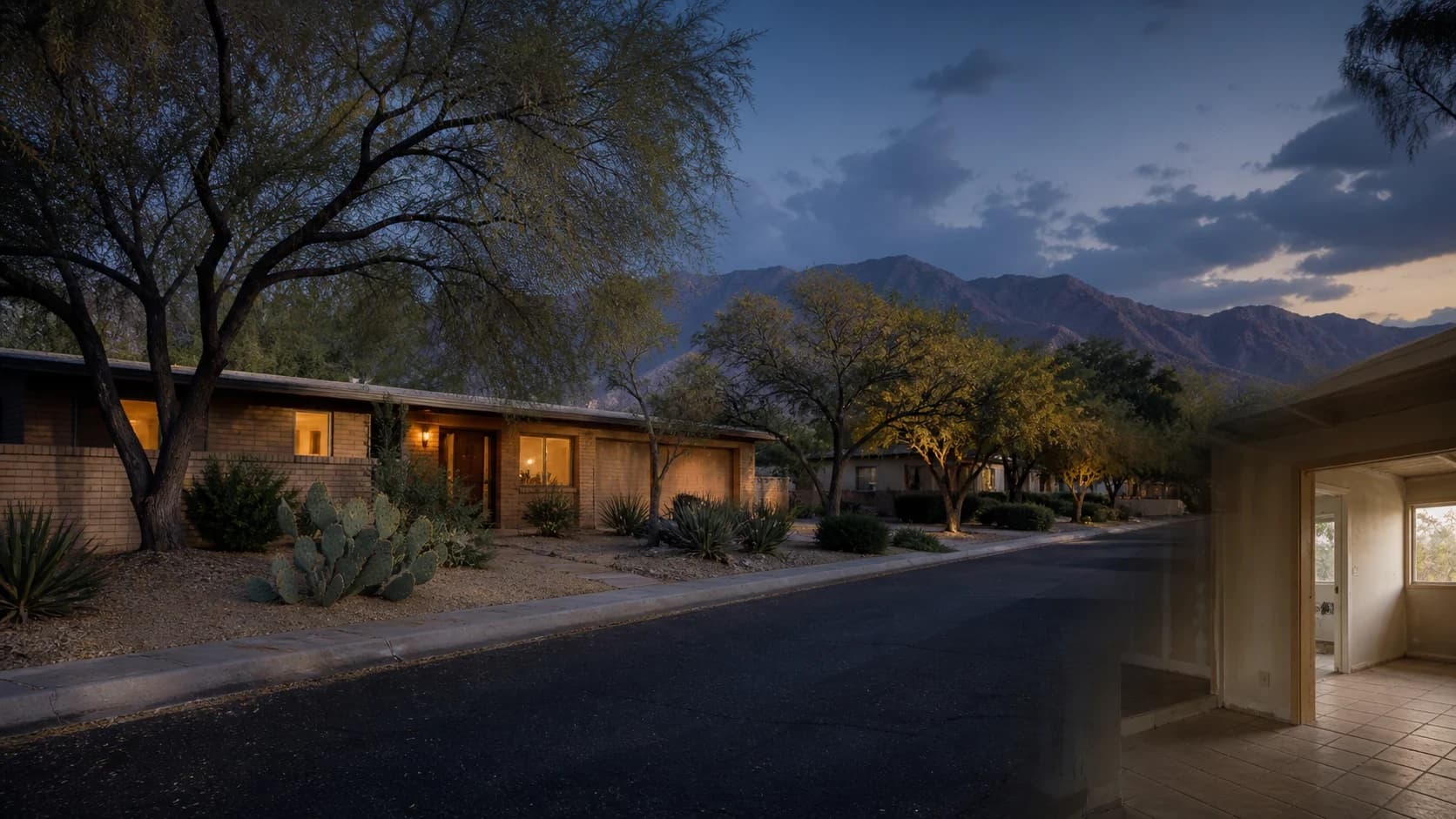
Start at the street. Notice the approach, traffic movement, parking, neighboring uses, lot position, grade, visible drainage paths, walls, trees, rooflines, equipment, and what looks toward the property. These observations are not conclusions. They tell you what to verify.
Pima County explains that known flood maps have limits and may not show every flood or erosion hazard. It also notes that the correct source depends on jurisdiction. A map is useful. A map without its scope and limits is false confidence. Record the question and confirm it through the proper agency, insurer, and specialists as needed.
- Where does water appear to enter, cross, and leave the lot?
- What does the property see, and what sees the property?
- What is the route for the buyer's regular trips at the times the buyer expects to travel?
- Which surrounding condition could matter after dark, during rain, or on a busy day?
Inside the house
Move slowly enough to understand circulation. Where do groceries enter? Where does laundry happen? Can the rooms hold the furniture and activities that matter? Which doors, steps, hallways, or level changes affect daily use? A floor plan can be attractive and still fight the buyer's routine.
Then scan for condition questions. Look from safe areas. Do not operate equipment without permission or perform an inspection. Note visible stains, cracks, uneven surfaces, odors, window condition, door movement, cooling information, water heating, electrical panel location, plumbing clues, and signs of additions or altered openings. The next move is a qualified inspection, not a showing diagnosis.
Ask what changed
When a room or system appears newer, ask what was done and what documents are available. When a space appears enclosed or added, ask whether permits or records exist where required. When equipment has a service label, photograph or record it only with permission and compare it with available documentation later.
The Arizona Buyer Advisory is built around independent inquiry. Use the showing to create the inquiry list. Seller representations, public records, and listing statements can each be incomplete or need clarification. Keep the question open until the right evidence closes it.
Ask what the house will require
Every home requires upkeep. The useful question is which obligations arrive soon and whether they match the buyer's time, cash, skill, and patience. Yard size, pool equipment, roof type, exterior surfaces, cooling systems, windows, walls, drainage features, and mature vegetation can all create recurring work or specialist needs.
Write three lists after the showing. The first is known facts. The second is questions. The third is buyer preferences. Do not merge them. An older finish can be a preference. A visible leak concern is a condition question. A represented roof age is information to verify.
Finish with the future buyer
Resale is not a promise about appreciation. It is a test of flexibility. Ask whether the floor plan, parking, lot use, access, bedroom count, major systems, and improvement quality could make sense to more than one future buyer. Note any feature that is costly to change or useful only under one narrow plan.
Then compare the home with the other choices available to this buyer. What does it do better? What burden does it ask the buyer to accept? Which uncertainty could reverse the decision? The showing has done its job when the next question is clear.
The ten question card
Use the same card at every property. Consistency protects the comparison when the homes begin to blur.
- How does the street and lot work for my daily life?
- Where could water, drainage, or erosion create a question?
- What do I know about the roof, cooling, plumbing, electrical, windows, and water heating?
- What changed, and what documentation is available?
- Which condition concern needs an independent inspector or specialist?
- What will insurance require or exclude for this specific property?
- Which HOA or recorded obligations apply, if any?
- What must be repaired, what should be maintained, and what would be a preference?
- What is the complete estimated monthly and first year cost?
- What could matter to a future buyer that I am tempted to ignore today?
Use the 85710 questions worth asking at every showing to compare one home.
Keep the property questions, written costs, and contract choice in the same file.
- 01Compare the homeUse the same condition, system, lot, and location questions each time.
- 02Build the cost fileAdd written lender figures, inspection findings, insurance, and known work.
- 03Set the decisionChoose price, terms, investigations, or a stop point from the evidence.
Continue inside 85710
Check a tri-level or split-level room by room Compare remodeled and original condition Prepare the offer before a deadline Turn inspection findings into one decisionMethod
This field guide groups questions from the Arizona Buyer Advisory, Pima County flood hazard guidance, and the CFPB inspection process into a repeatable showing sequence. It is designed for note taking before formal due diligence.
Limits
A showing is not an inspection, flood determination, appraisal, title review, insurance decision, permit determination, or legal opinion. Do not enter unsafe areas, climb on roofs, disturb property, or operate systems without permission. Verify each material question through the contract and the appropriate public agency or qualified professional.